Showing posts with label food for fuel. Show all posts

Tuesday, April 30, 2013

Breakfast Beans

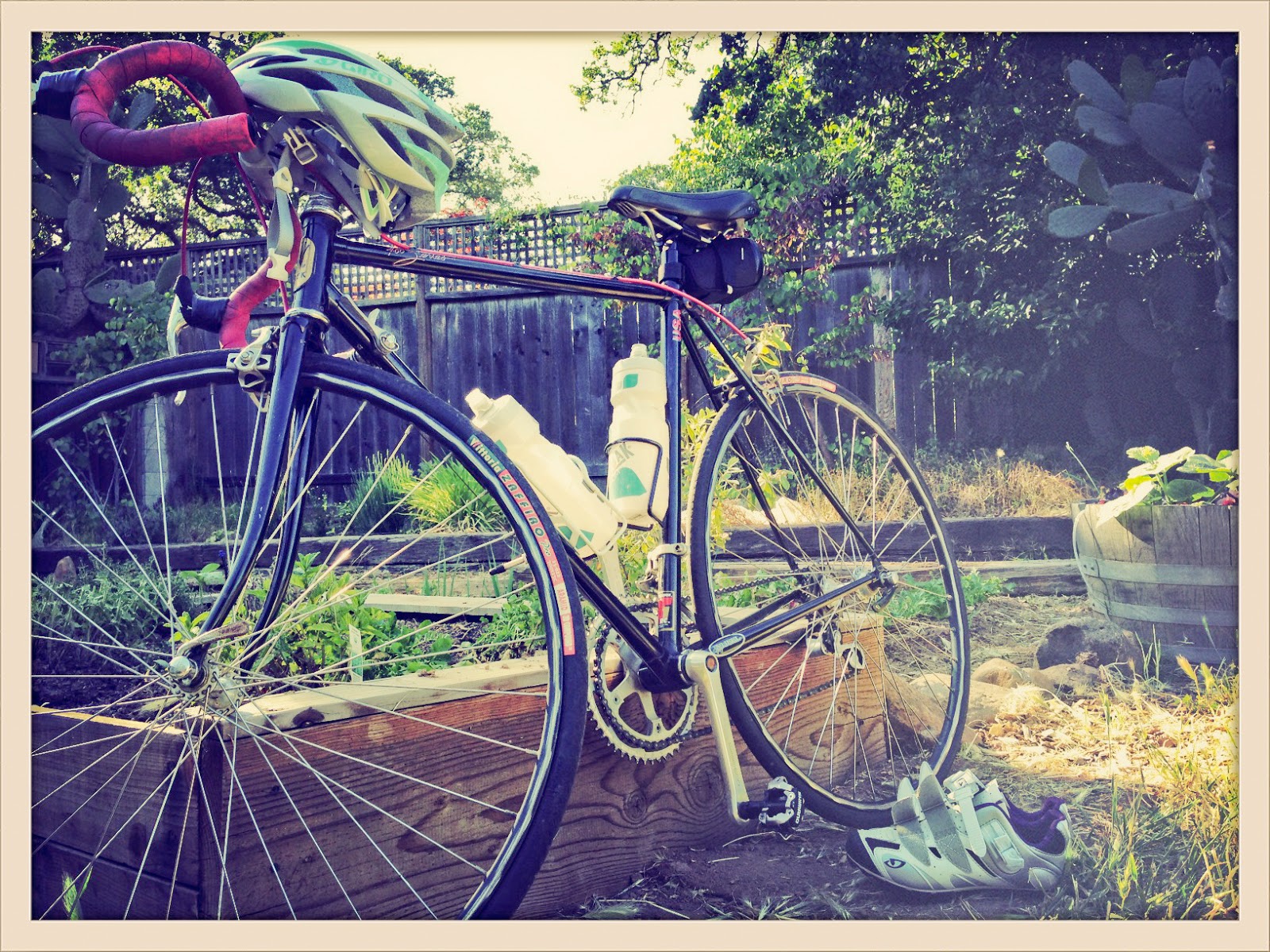
The beans I soaked last night have swollen in the bowl. Plump, burgundy beans like polished beach pebbles and a name like a comic book exclamation. ADZUKI!  I pour them into a large pot and add more water. The screen door lets the last hour of cool air into the kitchen. I play Patsy Cline on a loop. I pull lycra over my head, over my hips. I like how it compresses my flesh, holds me tight, will not budge. The beans begin to boil and the steam smells like hot earth. I fill water bottles, I stuff my pocket with packets of viscous sugar, I leave my bike shoes by the door. When the beans are nearly done I throw a handful of salt in the water. I slice fat crescents of avocado and split cherry tomatoes in half with a sharp, blue knife. I drain the beans and scoop some hot from the colander. A clove of garlic and an egg in the pan. Each bite is muscle flexed and contracted, the turn of the pedals, the cadence quickened, a hill climbed. I eat my meal and picture the ride. An hour later I am winding up the road on my old Trek bike. The acacia still blooms in the shady hollows but most has given way to a thick cloak of jasmine and early California lupine. There are deer on the road, hawks above the vines, flop-eared rabbits half-hidden in the mustard between the rows. The road keeps climbing and to my right the road falls away to a narrow valley of eucalyptus and juniper. There are few cars. There are pot holes. The sun clamps down on me, draws sweat from every inch of skin. From the next bend in the road I can see the Golden Gate Bridge, Mt. Tam, the tiny rectangle of a container ship headed out to sea. The road steepens, steadily climbs, I keep pushing and pulling, my legs burn, my hips burn, every thing is taut, contracted, gripped. Involuntary sound escapes from deep in me, something guttural, animal, the last reserves of effort, and finally my tires find level ground and the blessed tip down hill.
There is something very special and also very logical about feeding the body for fuel. We spend so much time thinking and talking about how we look, and the conversations most overheard about food seem to be about what to eat and what not to eat in order to lose weight, whether that's a health based imperative for someone or not. But what about feeding the body so that it can perform? So that it can run and swim and dance and bike and play? On Sunday I will participate in my first triathlon. I have come to realize that one of the things I most love about training is how I come to re-understand my body as an instrument of action, and not as an object. For 12 weeks I have pushed myself, asked my body to perform tasks it has never done before (ie, getting off a bike and immediately going for a run. What?!), and the way I eat has changed. Of course my food must still taste delicious, but what I want to eat is food that will fuel my body, repair my muscles, sustain a long ride, or a run or a swim. Most of us forget that food in the body, at its most basic level, is energy. What do you do with your fuel? When is the last time you recognized your body for all the amazing work it does, all it is capable of doing? Maybe this week, forget about the mirror, put away the scale. Fuel yourself. Go out and play.

A Bowl of Beans
1 cup of dry beans, rinsed and soaked overnight*, less if you don't want leftover beans
water
salt
1 or 2 eggs
1/4 cup of cherry tomatoes, halved
1/2 a firm but ripe avocado, sliced
1 clove of garlic chopped
a handful of broccoli or kale, chopped
1 T coconut oil
olive oil to taste

*You can make this with canned beans too but I prefer the taste and texture of dried beans. Soaking them overnight will shorten the cooking time and make them easier to digest.

Pour the beans and the soaking water into a pot and add more water so the beans are covered by at least an inch of water. Bring to a boil, then reduce heat and cook until tender. About 30 minutes (might take longer for bigger beans such as kidney beans or white beans).  I recommend testing the beans around 20 minutes and if they are tender but need to cook more, add a good pinch of salt. Salting too early can make the beans shriveled and hard.

Drain the beans in a colander over the sink. Scoop one cup of cooked beans into a bowl. The rest you can use over the coming days in variations on this dish or in other meals.

In a small pan heat the tablespoon of coconut oil over medium-high. Throw in the garlic, broccoli and/or greens and sautee until soft. Add the veggies to your bowl of beans.

Return the pan to the burner. You may need to add a bit more oil. Fry or scramble an egg then place on top of the bean-veg bowl. Add tomatoes and avocado and maybe some fresh herbs and hot sauce. Salt and pepper to taste. 


Tuesday, March 5, 2013

Fettuccini with Goat Cheese, Bacon, and Fava Leaves

Monday, after a long day of climbing, we burst into the house, ravenous, and ready to eat just about anything in sight. I opened the fridge, hoping to see some feast I had brilliantly made in anticipation of this moment, only to be reminded that we desperately needed to go grocery shopping. Not even a jar of peanut butter to tide us over. We needed dinner and we needed it fast.

This pasta dish came together with what we had on hand: a package of bacon, a pound of brown rice pasta, some goat cheese, and an endless supply of tender, young fava leaves from our backyard. Fava leaves are a beautiful, silvery-green color and they have the same subtle, nutty flavor of the young fava bean. I have been eating them raw in salads with blood oranges (another obsession of late) and avocado, or throwing them in last minute to grain dishes and soups. The flavor has the same promise of spring as young pea shoots or the first slender stalks of asparagus.
If you don't have fava on hand you can easily substitute another green. Dandelion greens will add a nice bitter bite to the dish and sorrel will give it a lemony lift. If you are in a greens-deprived place, there is always delicious, reliable kale. The beauty of this pasta is the ease of the recipe and its potential for endless iterations with whatever you have on hand.

Fettuccini with Goat Cheese, Bacon & Fava Leaves
Serves 4 (or 2 SUPER hungry people)

1lb Brown Rice Fettuccini (or regular fettuccini)
1 medium sized yellow onion, chopped
4 or 5 pieces of thick cut bacon
4 oz chevre
3 large garlic cloves smashed with the back of a knife
4 cups fresh young fava leaves
salt and pepper
parmesan to top

Heat a large cast iron pan over medium heat. Add the bacon and cook until crispy, about 20 minutes. Remove the bacon and place on a paper towel-lined plate. If your bacon yielded a lot of fat you may want to drain off half of it to save for another use. Be sure to leave a good amount (at least 1/8 of a cup) in the pan. Once the bacon has cooled, chop into good sized chunks, about 1/2 an inch. 

Stir the garlic and onion into the bacon grease (careful for grease splatters!) and lower the heat a little. Add lots of fresh cracked black pepper and stir periodically. You want the onions to be soft and starting to brown by the time the pasta is finished cooking.

While the onions and garlic cook, bring a large pot of well salted water to a boil. Once boiling, add the pasta and stir. Cook until al dente. Reserve 1 cup of the pasta water then drain the pasta in a colander. 

Add the pasta, bacon and goat cheese to the pan of onions. Stir everything together, adding small amounts of the reserved pasta water at a time to help the sauce come together. Once everything is well mixed and the pasta evenly coated, remove from heat and stir in half of the fava leaves. Once the leaves are well mixed and wilted add the remainder of the leaves.

Serve immediately topped with fresh grated parmesan, cracked black pepper, and--if you are as citrus obsessed as I-lots of fresh lemon zest.

Thursday, December 20, 2012

The Camp Kitchen

Not so long ago, we spent winters on the road. Each fall we would pack our little car to the gills and set off from Maine in search of warm weather and dry rocks. For six months we lived in a tent, roamed the country and climbed. When we dipped into cities to see friends, I was always struck by how many people asked us the same question: "How do you eat out there?" The short answer is, simply and well. When pressed for details we'd admit to eating for fuel, eating what cooks quickly, eating the same, easy-storage vegetables for months at a time, and eating cheaply. We are often in (food) deserts, sometimes in places where our cooking and drinking water needs to last a few days until we can drive the hour back to town, and we never have ice in our cooler. Too messy and an extravagant expense when on the road for so long. We don't eat much meat at camp (never chicken), and by the time we get home we crave just about anything cooked in an oven instead of on a stove top. Once we are off the road I have a hard time recalling specific dishes we ate at camp, so on this past (much abbreviated) trip I tried to document some of our camp meals. I did not take pictures of the many delicious rest-day meals we ate here, and here, among other places. Nor did I document every single meal, because, as I said, we eat a lot of the same things over and over again. Once I am back oven-side I will get a new recipe to you. In the meantime, I hope this finds you all healthy and happy, safe and sound.


Thursday, November 1, 2012

Favorite Pancakes & Fall Trips

November 1st!!! How did that happen so fast? In the past few weeks I've experienced the splendor of autumn (New England), an early taste of winter (Tahoe), and even a few searing, summer-like days here in Sonoma; a last hurrah before the much needed rain we got this week.
My trips have been a wonderful mix of the nostalgia-stirring and the brand spanking new.
The trip to Maine was a homecoming. Familiar, sentimental in an almost painful way. Even though it was October it smelled like every summer of my whole life: of wet pine, of moss, faintly of smoke and strongly of the sea. It smelled like capture the flag, blood drawn by a barnacle, mildewed rope bracelets, first kiss, first drunk, and lying on the lawn after dinner with my sister and my parents because the stars were too bright and too startlingly milky to ignore. And bed can always wait.
I have been to Tahoe a few times now and feel like I am only just beginning to understand its greatness. On our most recent trip we left Sonoma in the dark, at 6am, when it was already 60 degrees, and made it to Donner Summit by 9am to find thigh high snow, fog over Donner Lake, and that bright mountain sun already glaring against the white- a reminder that you have been thrust several thousand feet towards it in only a couple of hours.
 I have also, in recent weeks, found a favorite pancake recipe. Purists be warned! This is not your standard flapjack. But stay open minded if you are able. My pancake obsessed sweetheart has completely converted from his flour-based pancakes to these gluten-free, energy packed, and truly scrumptious stacks instead. 
Said sweetheart, Pete, is a rock climber, and thus, has chronic joint pain. When its particularly bad we try to eat an anti-inflammatory diet. For those of you new to this idea it basically means eating a mostly raw, plant-based diet, and cutting back on alcohol, meat, dairy, caffeine, sugar and gluten. I know. Even as I type the list I realize it sounds severe. But in reality, when we eat this way, it never feels abstemious. I love to cook (as you know), we both love to eat (those of you who know us can attest), and we want our food to taste good even when consuming with the specific intent to heal the body, or even fuel it.

After making this pancake recipe once I decided to make a quadruple batch of the dry ingredients to have the mix on hand all the time. I have since gone from being a once-every-couple-of-months pancake eater to a bi-weekly pancake eater. Very happily and healthily so.

The Pancakes
adapted from Sprouted Kitchen
1/3 cup almond meal *
1/3 cup oat flour **
1/3 cup quinoa flour
1 t baking powder
1/2 t baking soda
2 T sugar
pinch of fine grain salt
1 egg
1 cup almond milk (or milk or buttermilk)
coconut oil or butter for cooking
1 t vanilla (optional)

*You can make your own almond meal by grinding whole or slivered raw almonds in a food processor until very fine.
**You can make your own oat flour by grinding whole organic oats in a food processor until very fine.

Combine all the dry ingredients in a large bowl and mix well. 

In a small bowl lightly beat the egg, then add the cup of almond milk and the vanilla.

Add wet ingredients to the dry ingredients and stir to combine. 

In a cast iron or heavy bottomed pan, melt the coconut oil or butter over medium heat.  When the pan is ready add about 1/4 cup of the batter and repeat as desired without overcrowding. Personally, I like to limit it to 2 pancakes at a time so they are easy to flip.

When bubbles form on the top of the pancake, flip and cook another minute or so. When making larger batches for a crowd I pre-heat the oven to 250 degrees and keep the finished pancakes warming on a plate so everyone can eat at once. 

The options for toppings are endless. As documented in the photo above, I mixed some Maine maple syrup with whole milk yogurt and topped my pancakes with that and fresh figs picked from a tree up the street. We have also eaten them with homemade apple syrup from a friend. They are great with just a slab of high quality salted butter melted on top, or a scoop of your favorite nut butter if you are looking for enduring energy.

How do you like to eat them? Please let me know!